





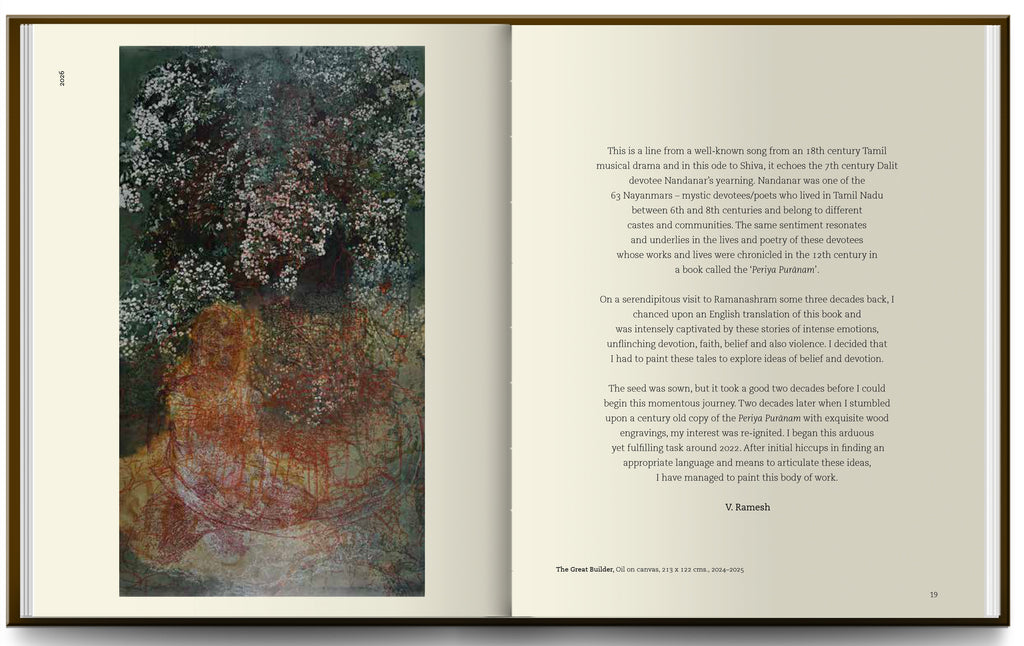

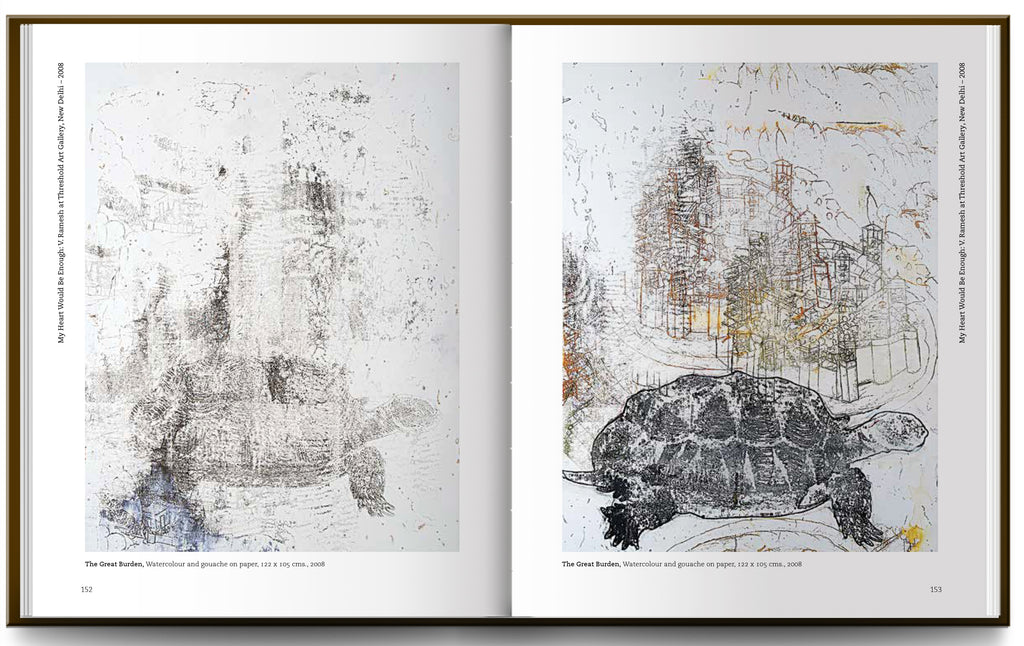
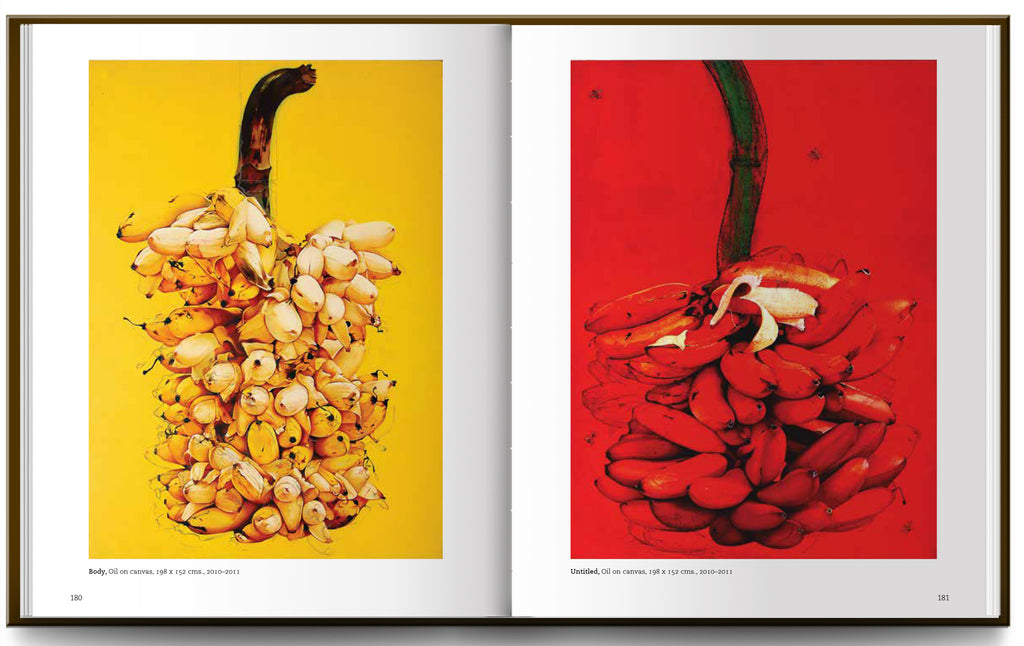

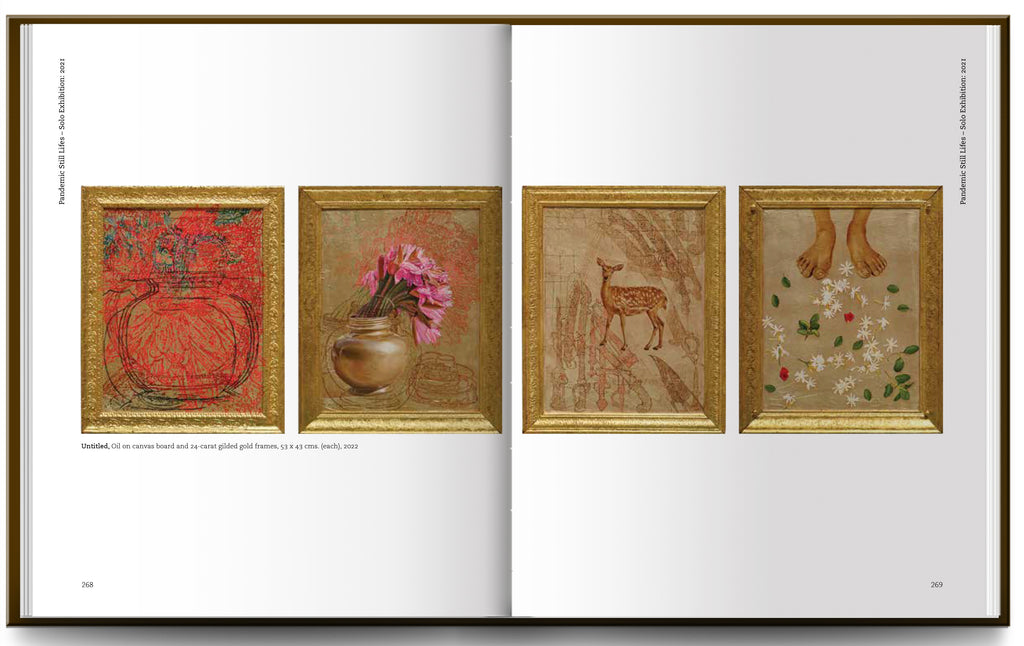
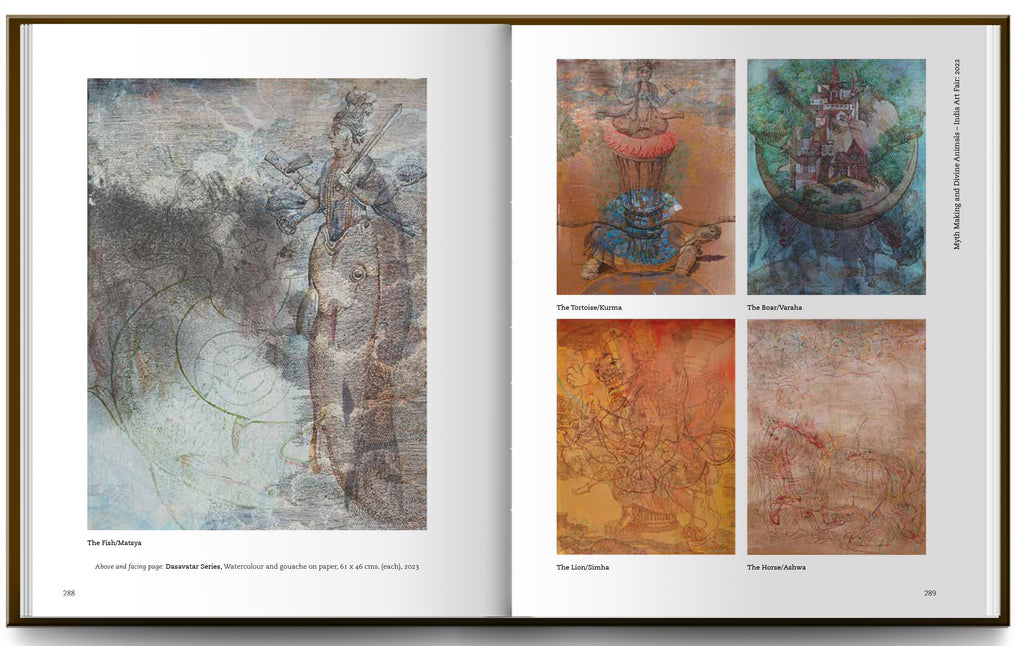
At the heart of his artistic journey lies a profound spiritual engagement, shaped by both inquiry and devotion, particularly through the teachings of Sri Ramana Maharishi, whose philosophy of self-enquiry and inward contemplation has deeply informed Ramesh’s visual imagination. This book traces the evolution of Ramesh’s visual language, highlighting his distinctive handling of colour, line, and surface, alongside his engagement with Indian print and miniature traditions and contemporary painting. More than a record of his artistic journey, it offers a glimpse into an artist for whom painting has become a means of looking inward, making sense of the visible world, and searching for what lies beyond it.
Dr. Kristine Michael is a ceramic artist, curator, researcher, writer and arts educator based in New Delhi. Trained in ceramic design under Dashrath Patel at the National Institute of Design, Ahmedabad, she later completed her PhD from School of Arts and Aesthetics, Jawaharlal Nehru University. Alongside her studio practice, Michael has devoted much of her career to researching and documenting the history of Indian ceramics and glass. Her research has taken her to significant archives and collections, including the Victoria and Albert Museum and the Naprstek Museum Prague. She has received several fellowships and awards such as the Sanskriti Award and the Nehru Fellowship and has curated ceramic exhibitions in India and internationally. In 2025, she was on the international jury for the Martinsons Award at the Mark Rothko Museum, Latvia. Her writings on Indian ceramics, craft and material culture have appeared widely, and she is also the co-editor of the biannual ‘Mrin: Journal of Indian Ceramic Art’ published by the Indian Ceramic Art Foundation. Currently, she is curriculum leader of Visual and Performing Arts, The British School, New Delhi.
Ranjit Hoskote is a poet, curator, cultural theorist and one of the most significant voices in contemporary Indian art criticism. He studied Politics at Elphinstone College and later completed a Master’s degree in English Literature and Aesthetics at the University of Bombay. His career has moved fluidly between poetry, art writing, cultural theory and curatorial practice. He worked as an art critic and cultural commentator for The Times of India and later The Hindu, while continuing to publish widely on art and culture. As an independent curator, he has organised major exhibitions in India and internationally, including the 7th Gwangju Biennale and India’s first national pavilion at the Venice Biennale in 2011. He is also the author of numerous books of poetry, art criticism and cultural theory, and has received several literary honours, including the Sahitya Akademi Golden Jubilee Award, the Sahitya Akademi Translation Award, the Sanskriti Award for Literature, the SH Raza Award for Literature, and the 7th Mahakavi Kanhaiyalal Sethia Award for Poetry. Hoskote curated India’s first-ever national pavilion at the Venice Biennale (2011) and was co-curator, with Okwui Enwezor and Hyunjin Kim, of the 7th Gwangju Biennale (2008). Since 1993, he has curated numerous exhibitions of visual art, both in India and internationally.
Madhu Jain is an independent art critic, curator and journalist whose career has made a significant contribution to the writing on modern and contemporary Indian art. Educated at Connecticut College, she went on to complete a Master’s degree in literature at Delhi University and studied French literature at the Sorbonne in Paris. She began her journalistic career with The Statesman, writing on politics, foreign affairs and culture. She was also the New Delhi correspondent with the French national daily, La Croix, for a decade before she joined India Today in 1986, where she remained until 2000. She has contributed to publications including Outlook and The Hindu, writing on art, cinema and contemporary life. Jain has also curated exhibitions, including Kitsch Kitsch Hota Hai on kitsch and the contemporary imagination, and the other on the painter Viswanadhan, and continues to bring a perceptive, lively voice to Indian art criticism.
Kamala Kapoor is an independent art critic and curator based in Mumbai, who has been writing on Indian contemporary art since 1983. Educated at the Faculty of Fine Arts, Baroda, and at Santiniketan, she developed a career spanning art criticism, curatorial practice and research. Her writings have appeared in newspapers, magazines, journals, exhibition catalogues and international publications, including Art AsiaPacific. Her 2002 book ‘The Art of Vivan Sundaram’ is among her notable publications along with three contributory essays, on Gulam Sheikh, Atul Dodiya and Bhupen Khakhar for the book ‘Vitamin P: New Perspectives in Painting’, Phaidon Press Ltd. Kapoor has also contributed to international exhibitions and research projects, bringing a perceptive and nuanced understanding of contemporary Indian art to a wider audience. She was the curator for the Indian representation at “Containers ’96, Copenhagen, Denmark” and the co-curator for the Indian representation at the second Asia-Pacific Triennial of Contemporary Art, Brisbane, Australia. Kapoor was a member of the Jury at the 22nd Alexandria Biennale, Alexandria, Egypt, 2003, and a commissioned researcher on Indian contemporary art for the Fukuoka Triennale, Fukuoka Asian Art Museum, Fukuoka, Japan, 2005.
Georgina Maddox is an independent art critic, curator, journalist and visual artist based in New Delhi, with more than two decades of experience in Indian art and culture. She studied Art History and Visual Arts at Maharaja Sayajirao University, Vadodara, followed by postgraduate studies in Social Communications and Media at Sophia College, Mumbai. Her career in journalism includes senior editorial positions at The Indian Express, The Times of India and Mail Today. She has written extensively for publications including The Hindu, India Today, Art India, STIR World and TAKE on Art. Alongside writing, she has curated exhibitions and contributed critical essays to several books and art publications. Her work often explores questions of gender, sexuality, identity, marginalisation and social agency, reflecting her interest in art as a space for dialogue and resistance. Maddox recently was the recipient of the Hello India Art Awards for the Barbil Art Project won for best collaboration between the Arya Foundation and the Utsha Foundation.
Sadanand Menon is a journalist, cultural critic, photographer, curator and teacher whose career has spanned several decades across the worlds of media and the arts. Formerly the Arts Editor of The Economic Times, he has written and lectured extensively on art, photography, dance, theatre, politics and culture. His work is distinguished by its engagement with the political and historical dimensions of artistic practice. Menon has curated important exhibitions, including major retrospectives of Dashrath Patel, S.G. Vasudev and Balan Nambiar for the National Gallery of Modern Art. A long-time collaborator of dancer and choreographer Chandralekha and designer artist polymath Dashrath Patel, he is managing trustee of Spaces Cultural Centre, Chennai which houses their archives. He has been on the Advisory/Executive Committees of the National Museum, National Gallery of Modern Art, Lalit Kala Akademi, National School of Drama, Indian Institute of Advanced Study, Shimla, the Board for Intangible Cultural Heritage, Raza Foundation, Delhi and Dakshinchitra, Chennai.
Shruti Parthasarathy is a writer, art historian and curator of South Asian modern and contemporary art, interested in its multiple, contested modernities and modernisms. She has worked extensively in exhibition curatorial, arts publishing, and archival spheres. She is the editor of the volume of art criticism on the Indian art critic K.B. Goel’s writings, K.B. Goel: Critical Writings on Art 1957–1998 (SSAF-Tulika, 2020), with a critical introduction. She has published extensively on south Asian modernism, and her most recent long form essay is ‘G Sharp: The Virtuoso Gujral Tone – Satish Gujral on Partition, Emergency, 1984’, in Kishore Singh ed., Satish Gujral: A Centenary (New Delhi: Gujral Foundation, 2026). Her most recent curatorial project was Looking Southwards: The DakshinaChitra Vision of Craft, Art and Cultural Heritage, for the DakshinaChitra Museum, Chennai, January–March 2026.
Indrapramit Roy is a contemporary artist, educator, illustrator and writer whose practice has evolved through a sustained engagement with painting, printmaking, memory and space. He studied printmaking at Visva-Bharati, Santiniketan, painting at M.S. University, Baroda, and later completed an MA in Painting at the Royal College of Art, London under the Inlaks Scholarship, which included a term each at Cite des Arts, Paris and HdK Berlin on an Erasmus Exchange Scholarship. Since 1995, Roy has taught at the Faculty of Fine Arts, M.S. University, Baroda, alongside a prolific studio practice. His paintings often evoke quiet, nocturnal urban spaces, where absence and silence become powerful ways of suggesting human presence. He has had 21 solo shows till date and has been part of many curated international exhibitions. He has represented India at Asian Art Exhibition in Macao, the Cairo Biennale, Cairo and India @ 70 at Bangkok. Indrapramit’s articles have appeared in various publications. His honours and fellowships include Kanoria Centre Fellowship, Junior Research Fellowship, Fulbright Fellowship, and the Praful Dave Memorial Award among others.
Gayatri Sinha is a Delhi-based art critic, curator and editor whose career has significantly contributed to the writing and documentation of modern and contemporary Indian art. She studied English Literature and Economics at the University of Calcutta, followed by postgraduate studies in Media Studies, Social Psychology and Critical Appreciation. Her primary areas of enquiry are in gender and iconography, lens based media practices, social history and the study of classical texts. She began her career as an art critic with The Indian Express, and subsequently wrote for The Telegraph and The Hindu. Sinha has curated extensively in India and internationally and has edited several important publications on Indian art. In 2011, she founded Critical Collective, an influential digital platform dedicated to preserving and expanding scholarship on Indian visual culture. She has lectured widely including at the Tate Modern, MoMA New York, the Rockbund Museum Shanghai, Arken Museum Denmark, CUNY, Duke University, USA. She has received research grants from the Ministry of Culture, Government of India and Ford Foundation. She was the recipient of the Tate Asia Research fellowship 2017.
Dr Varsha Das has a PhD in Nonformal Education. She has been a resource person for the Asian Cultural Centre for UNESCO, Tokyo. Varsha Das has been instrumental in introducing Hindi literature to a larger audience as a translator. She writes fiction, non-fiction, poetry, radio plays and children’s books in many Indian languages. She is the recipient of several awards from Central Sahitya Akademi, New Delhi, Gujarati Sahitya Parishad, Ahmedabad, Soka University, Tokyo, etc. She worked for three decades in the National Book Trust, India in different capacities, including Officiating Director, and after her retirement served as the Director of National Gandhi Museum, New Delhi.
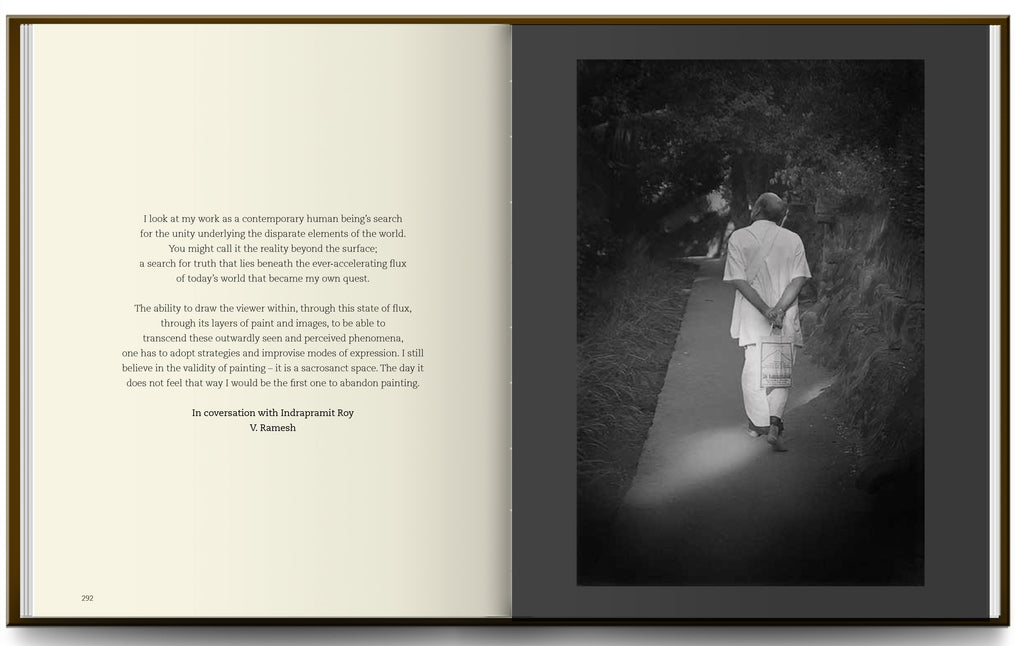
V. Ramesh: A Conversation by Indrapramit Roy
Let Me At All Times Remain In Your Presence 2026 by Varsha Das (Excerpt)
Transitions by V. Ramesh
The Journey 1980–1993 by Shruti Parthasarathy and Ranjit Hoskote (Excerpts)
A Story and the Genesis of an Exhibition by V. Ramesh
A Thousand and One Desires 2004–2006 by Ranjit Hoskote and Georgina Maddox (Excerpts)
Straight from the Heart by V. Ramesh
Painted Hymns: Darshan/Gaze 2006–2008 by Gayatri Sinha (Excerpt)
Assault by V. Ramesh 134
My Heart Would Be Enough 2008 by Madhu Jain (Excerpt)
Why Cross The Boundary 2011 by Kamala Kapoor (Excerpt)
Sanctum Sanctorum 2012 by Georgina Maddox (Excerpt)
The Passion of the Poet 2014–2016 by V. Ramesh
The Presence of Absence by Sadanand Menon (Excerpt)
Vignettes from an Epic by V. Ramesh
Pandemic Still Life 2021 by Kristine Michael (Excerpt)
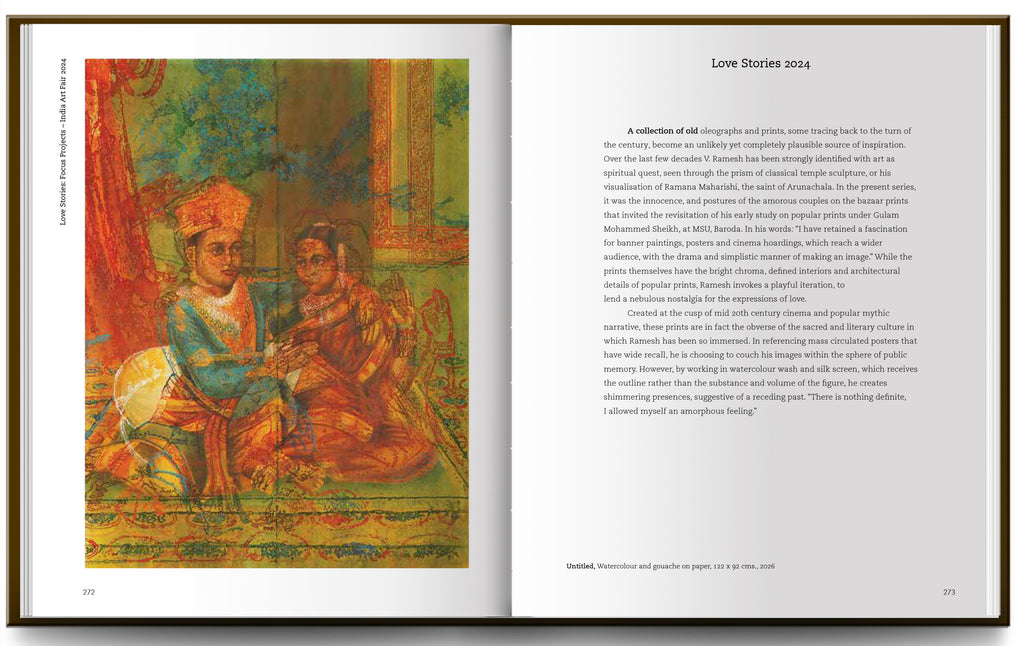
Love Stories 2024 by Gayatri Sinha (Excerpt)
वी. रमेश: रंंग, चेतना और कलात्मक जीवन दर्शन (V. Ramesh: Colours, Consciousness and An Artistic Philosophy of Life) by Varsha Das
| ISBN | 9789394501256 |
| Pages | 304 |
| Number of illustrations | 217 |
| Size | 8 x 10.25" (203 x 260 mm) |
| Date of Publishing | 5 November 2026 |
| Language(s) | English |
| Co-publisher(s) | Mapin Publishing |
| Rights Available | World Rights |